

Seniors can manage dry mouth and prevent cavities by drinking water regularly, using saliva substitutes, and brushing with fluoride toothpaste. However, persistent dryness may require professional attention, particularly when medications or medical conditions affect saliva production. At Tsawwassen Family Dental, our dental filling services can address decay that develops around exposed roots or existing dental work.
Dry mouth, medically known as xerostomia, becomes more common with age and can affect oral health even when teeth appear clean. Understanding what causes reduced saliva production is important because relieving dryness alone may not provide enough protection against cavities.

How Can Seniors Manage Dry Mouth and Prevent Cavities?
Managing dry mouth involves keeping the mouth comfortable while limiting the effects of reduced saliva. The aim is to relieve dryness throughout the day and protect tooth surfaces that have become more vulnerable to decay.
Keep Your Mouth Moist Throughout the Day
Taking small sips of water regularly can relieve the sticky sensation associated with dry mouth. Water also helps clear loose food particles after meals.
Some seniors notice that dry foods, particularly bread and crackers, become difficult to swallow without a drink. This happens because saliva normally moistens food and helps prepare it for swallowing.
We recommend keeping water nearby during the day and drinking it with meals when needed. Adding broth or sauces to dry foods can also make eating more comfortable.
Use Saliva Substitutes and Sugar-Free Gum
Saliva substitutes can provide temporary moisture when your salivary glands do not produce enough saliva. You can find these products as sprays, gels, and mouth rinses specifically formulated for dry mouth.
For example, someone who regularly wakes up with a dry, sticky mouth may find a moisturizing oral gel helpful before bedtime. The relief is temporary, but it can make sleeping more comfortable.
These tips can also help in different scenarios:
- Sugar-free chewing gum offers another option. Chewing stimulates saliva production if the salivary glands still have some function.
- Gum containing xylitol may be suitable, although it should not replace fluoride toothpaste or professional dental care.
- For seniors with dentures or jaw discomfort, chewing gum may be impractical. A saliva substitute is often easier to use in these situations.
- Avoid sugary candies as a way to stimulate saliva. Frequent sugar exposure can increase cavity risk, particularly when saliva production is already low.
Protect Your Teeth With Fluoride and Daily Cleaning
Fluoride plays an important role in cavity prevention, especially for seniors experiencing persistent dry mouth. It helps strengthen tooth surfaces and supports the repair of early mineral loss.
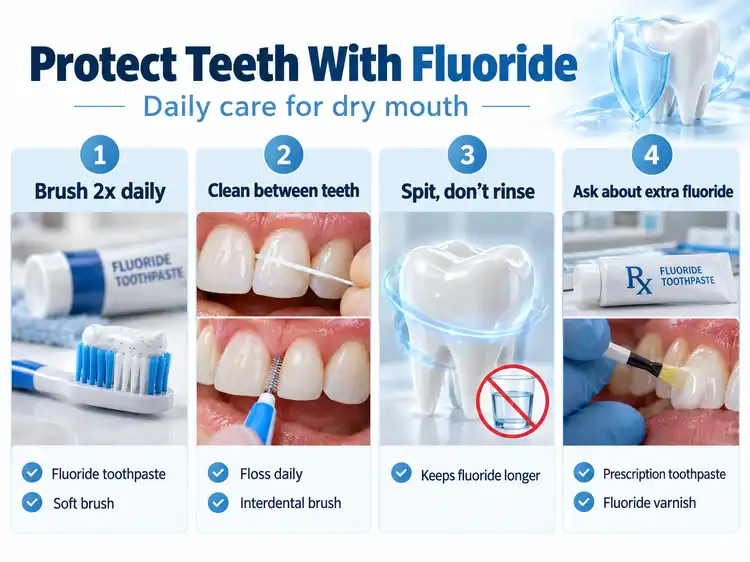
A practical daily routine includes:
- Brush twice daily with fluoride toothpaste. Use a soft-bristled toothbrush and pay attention to areas where teeth meet the gums.
- Clean between your teeth every day. Floss or appropriately sized interdental brushes can remove plaque that a toothbrush cannot reach.
- Spit out excess toothpaste without immediately rinsing. This allows fluoride to remain on the teeth longer.
- Ask about additional fluoride protection. Prescription-strength fluoride toothpaste or professional fluoride varnish may benefit seniors with frequent cavities or exposed roots.
A standard fluoride toothpaste may provide sufficient protection for some patients. Those with significant dry mouth or repeated cavities may need a stronger fluoride product.
Avoid Foods and Drinks That Make Dry Mouth Worse
Certain foods and beverages can worsen dry mouth symptoms or increase the risk of cavities when saliva production is low. At Tsawwassen Family Dental, we recommend paying attention to the following:
- Sugary foods and drinks: Frequent consumption of candy, sweetened beverages, and sugary snacks increases cavity risk, especially when reduced saliva makes it harder to neutralize acids.
- Caffeinated beverages: Coffee, tea, and energy drinks may worsen dryness in some people. Consider reducing your intake if you notice a connection.
- Acidic foods and drinks: Citrus juices, soft drinks, and other acidic beverages can contribute to enamel erosion, particularly when saliva production is limited.
- Salty or spicy foods: These may irritate dry oral tissues and cause discomfort during meals.
- Dry, crumbly foods: Crackers, toast, and similar foods can be difficult to chew or swallow without sufficient saliva. Adding moisture to meals may help.
- Alcohol-containing mouthwash: These rinses may irritate an already dry mouth. An alcohol-free mouthwash formulated for dry mouth may be more comfortable.
Why Is Dry Mouth Common in Older Adults?
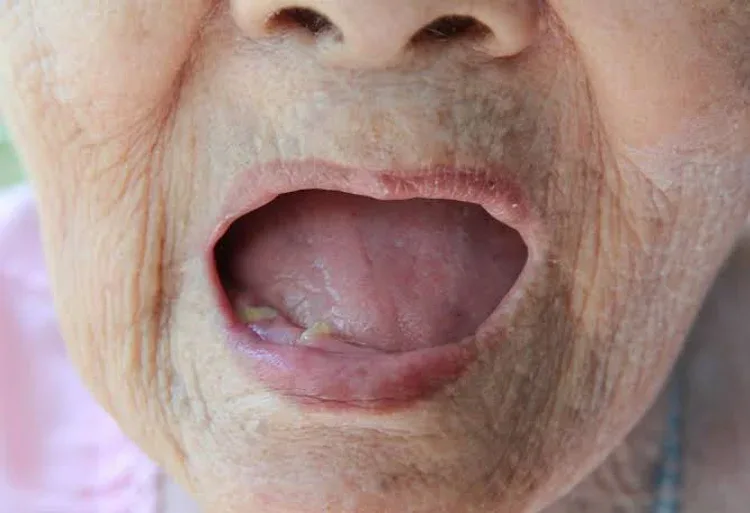
Dry mouth becomes more common among seniors, but aging itself is not usually the direct cause.
The National Institute of Dental and Craniofacial Research explains:
“Dry mouth is not a normal part of aging. If you think you have dry mouth, see your dentist or doctor to find out why your mouth is dry.”
Medication use is one of the most common reasons older adults experience reduced saliva production.
Several medications can affect the salivary glands, including certain antidepressants, antihistamines, blood pressure medications, and drugs used to manage bladder control problems. Diuretics can also contribute to dehydration and oral dryness.
Never stop or adjust prescribed medication without consulting your doctor or pharmacist. If dry mouth develops after a medication change, your healthcare provider can review possible alternatives.
Medical conditions may also contribute. Diabetes and Sjögren’s disease can affect saliva production. Previous radiation treatment involving the head or neck may damage the salivary glands.
How Does Dry Mouth Increase the Risk of Cavities?
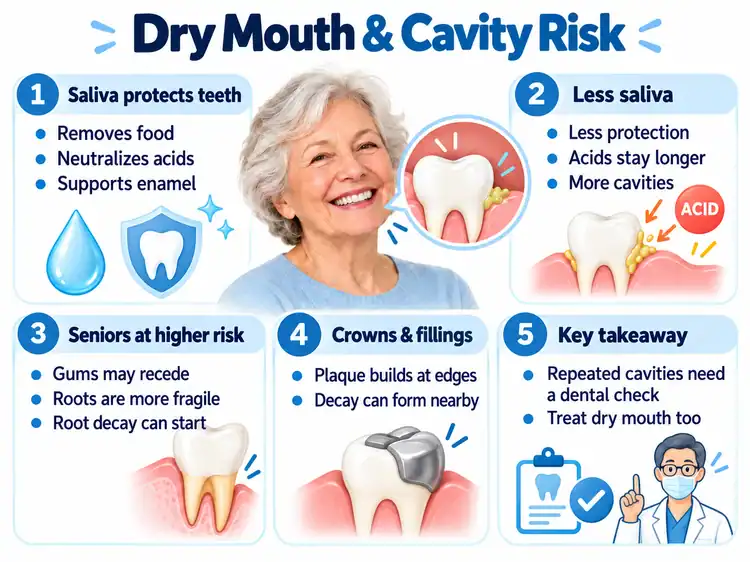
Saliva protects teeth throughout the day. It helps remove food particles, neutralizes acids produced by plaque bacteria, and supplies minerals that support tooth enamel.
When saliva production decreases, teeth lose some of this natural protection. Acids can remain in contact with tooth surfaces longer, increasing the risk of demineralization and cavities.
As gums recede, they expose portions of the tooth roots. These surfaces contain cementum and dentin rather than the thick enamel that covers the crowns of teeth. As a result, exposed roots are more vulnerable to decay.
A senior may brush regularly yet continue developing cavities near the gumline because reduced saliva has changed the conditions inside the mouth.
Existing fillings and crowns can also become vulnerable. Plaque may accumulate around restoration margins, allowing new decay to develop near the edges.
Repeated cavities should prompt a closer examination of the possible causes, including saliva production and oral hygiene difficulties. Treating the damaged tooth is important, but the dentist should also address the factors that increase the risk of further decay.
Is Dry Mouth Affecting Your Teeth?
Persistent dry mouth can increase your risk of cavities, particularly around exposed roots and existing fillings. Our dentists at Tsawwassen Family Dental can examine your teeth and gums, assess cavity risk, and recommend appropriate treatment or additional fluoride protection.
What Dental Treatments Help Seniors With Dry Mouth?
Dental treatment focuses on reducing cavity risk and managing complications associated with reduced saliva production.
During an examination, the dentist checks for exposed roots, signs of decay, and changes in the oral tissues. They may also ask about medication use and difficulties with eating or swallowing.
Professional fluoride treatment can help protect vulnerable tooth surfaces. The dentist may apply fluoride varnish or recommend prescription-strength fluoride toothpaste for patients at increased risk of cavities.
Gum evaluation and treatment may also be important. Seniors with gum recession should have the supporting tissues assessed, particularly if they experience bleeding or inflammation. When periodontal disease is present, periodontal gum care can help control the condition and reduce further damage to the supporting tissues.
Dry mouth can create additional problems for people who wear dentures. Reduced saliva may increase friction between the denture and oral tissues, causing soreness or difficulty keeping the appliance comfortable.
When Should Seniors See a Dentist for Dry Mouth?
Occasional dryness after waking up or during periods of dehydration is common. Persistent symptoms, however, deserve attention.
At Tsawwassen Family Dental, we recommend arranging a dental examination if dry mouth begins affecting eating or if you notice changes in your teeth and gums.
Watch for these signs:
- Dryness that persists for several weeks: Your mouth regularly feels sticky despite drinking water.
- Difficulty eating or swallowing: You need water with most meals because dry foods are difficult to manage.
- New cavities or tooth sensitivity: You notice discomfort near the gumline or develop cavities more frequently.
- Persistent mouth irritation: Your tongue or oral tissues feel sore or develop a burning sensation.
- Changes inside your mouth: You notice recurring sores, white patches, or unusual redness.
- Denture discomfort: Your denture begins rubbing against dry areas of the gums or palate.
- Symptoms after a medication change: Oral dryness develops after starting a new prescription or changing the dose.
Our dentists can examine the teeth and oral tissues for complications associated with dry mouth. They can also evaluate exposed root surfaces and recommend appropriate fluoride protection.
Conclusion
Managing dry mouth in seniors involves relieving discomfort while protecting teeth against cavities. Regular water intake, appropriate saliva substitutes, and fluoride toothpaste can help reduce the effects of low saliva production. However, persistent symptoms should be evaluated because medication use or underlying medical conditions may require further attention.
Tsawwassen Family Dental can examine the oral effects of dry mouth and recommend treatment for cavities, exposed roots, or gum problems. Our dentists can also assess existing dental restorations and advise on additional fluoride protection when cavity risk is high.
FAQ
These answers address common concerns about dry mouth, medication side effects, and cavity prevention in older adults.
-
Is Dry Mouth a Normal Part of Aging?
No. Although dry mouth is more common among older adults, aging alone is not usually the cause. Medications and certain medical conditions frequently contribute to reduced saliva production. Persistent dryness should be assessed by a dentist or physician.
-
What Medications Can Cause Dry Mouth in Seniors?
Certain antidepressants, antihistamines, blood pressure medications, and bladder control medicines can reduce saliva production. Diuretics may also contribute to dryness through fluid loss. Never change prescribed medication without consulting your doctor or pharmacist.
-
What Is the Best Toothpaste for Seniors With Dry Mouth?
Fluoride toothpaste is generally recommended because reduced saliva increases cavity risk. Seniors with exposed roots or frequent cavities may benefit from prescription-strength fluoride toothpaste. A dentist can recommend the appropriate fluoride concentration based on their oral health.
-
Can Dry Mouth Be Treated Permanently?
It depends on the cause. Dry mouth related to dehydration or medication may improve when the underlying issue is addressed. Conditions that damage the salivary glands may cause ongoing symptoms that require regular management.