

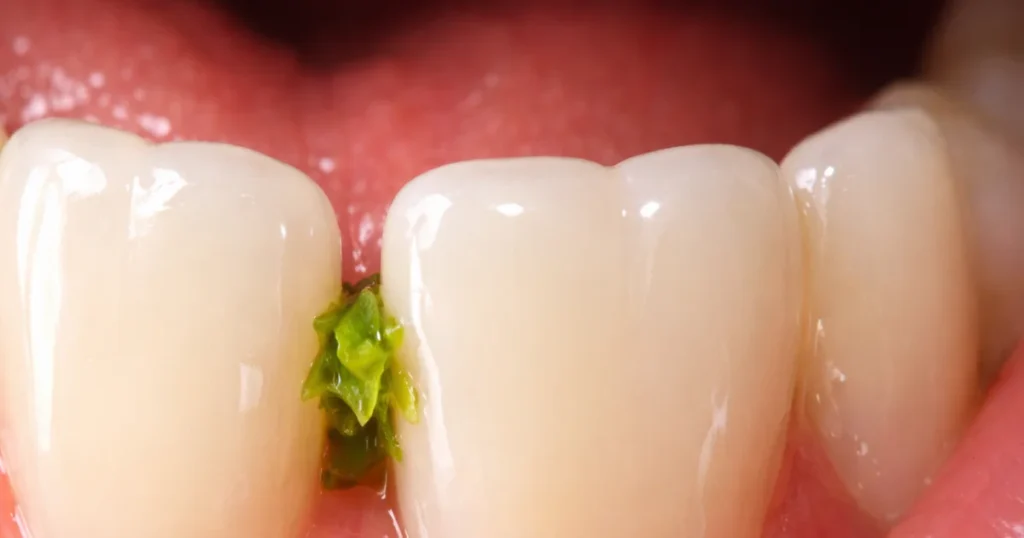
Food keeps getting stuck between your teeth because of an open contact, changes in tooth alignment, gum recession, or damaged dental work. Dentists call this food impaction. Occasional food trapping is common, but repeated trapping in the same location may indicate a problem that needs attention. In some cases, dental fillings can correct the affected area and restore proper contact between neighbouring teeth.
The cause is not always obvious. A tooth may look perfectly normal while a small cavity or defective filling creates enough space for food to become trapped. Below, we explain the most common causes, what repeated food trapping can do to your gums, and how dentists determine the appropriate treatment.
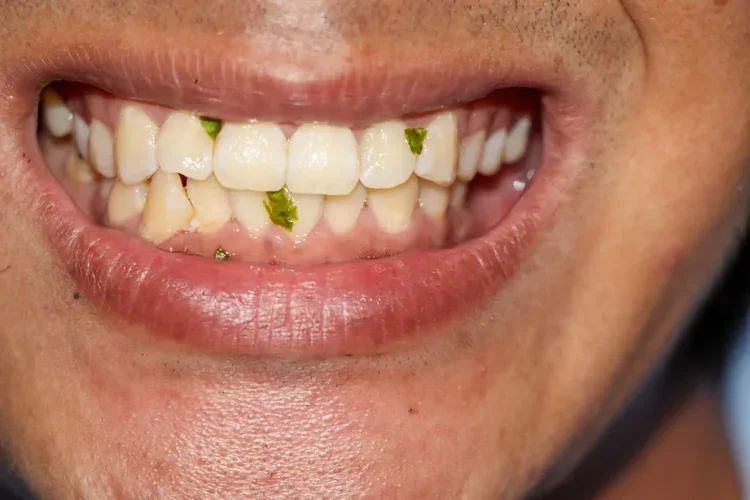
Why Does Food Keep Getting Stuck Between My Teeth?
Food typically becomes trapped when the natural contact between neighbouring teeth changes or the gum tissue no longer fills the space beneath it. Sometimes the cause is as simple as the shape of the food. In other cases, a dental problem allows food to enter the same area repeatedly.
1. Gaps or Open Contacts Between Teeth
Neighbouring teeth normally touch at contact points that help prevent food from being pushed into the gums during chewing. When these contacts become loose or disappear, food can enter the space more easily. Dentists call this an open contact.
Common reasons for open contacts include:
- Tooth movement: Teeth can gradually shift and create spaces that were not present before.
- Tooth wear: Changes in the shape of neighbouring teeth can weaken their contact.
- Missing teeth: Nearby teeth may tilt or shift toward an empty space, affecting their contact with other teeth.
- Changes in dental restorations: An old or incorrectly shaped filling may leave an opening where food becomes trapped.
2. Cavities or Damaged Fillings
A cavity between two teeth can change the shape of the contact area and create a place where food becomes trapped. The cavity may be difficult to see because it develops on a surface hidden by the neighbouring tooth.
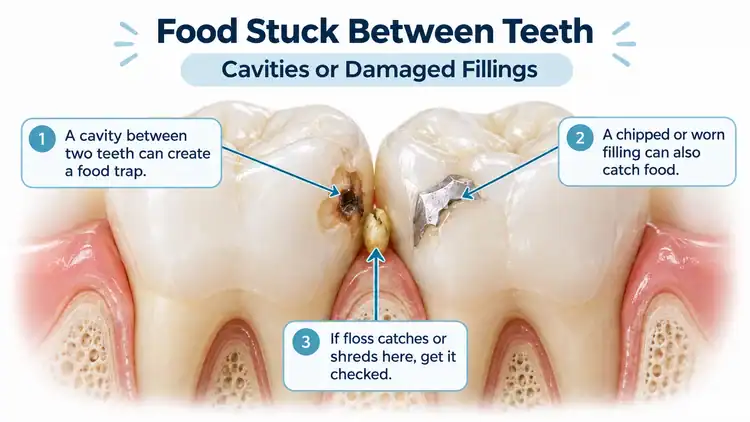
Old fillings can cause similar problems. If a filling chips or part of its edge breaks away, food may begin collecting in a location that previously caused no trouble.
You might also notice that floss catches or shreds in the same area. This can indicate a rough tooth surface, defective filling, or another problem that requires examination.
3. Gum Recession or Gum Disease
Healthy gum tissue normally fills much of the space beneath the contact between two teeth. When the gums recede, the exposed area becomes larger and food can collect closer to the roots.
This often becomes noticeable as a small triangular gap near the gumline. Food may enter the space without much resistance, particularly between the back teeth.
Gum recession can occur alongside periodontal disease, which damages the tissues supporting the teeth. Bleeding during flossing, persistent bad breath, and changes in gum position may indicate that the area needs periodontal evaluation.
If gum disease contributes to the problem, periodontal gum care can address inflammation and help manage the condition. However, periodontal treatment does not necessarily restore gum tissue that has already receded.
4. Crooked or Shifting Teeth
Teeth that overlap, tilt, or rotate can create irregular spaces where food collects. These areas may also be harder to reach with ordinary dental floss.
Tooth position can change over time. For instance, when a missing tooth leaves an empty space, nearby teeth may gradually shift toward the gap. This can alter their contact with other teeth and create new areas of food impaction.
Alignment problems do not automatically require orthodontic treatment. A dentist will first determine if the position of the teeth is responsible for repeated food trapping.
5. Poorly Fitting Crowns or Dental Work
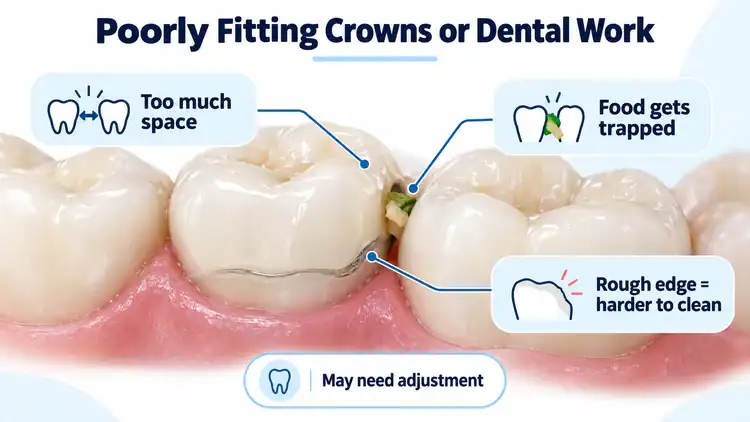
Dental crowns and fillings need appropriate contact with neighbouring teeth. If a restoration leaves too much space, food can enter during chewing. A rough or overhanging edge may also make plaque removal more difficult.
We recommend contacting your dentist if you notice this change after dental treatment. The restoration may need adjustment, repair, or replacement, depending on the cause.
Is It Normal for Food to Get Stuck Between Teeth?
Yes, food occasionally getting stuck between your teeth is normal. Fibrous foods such as meat and leafy vegetables can become caught even when your teeth and gums are healthy.
The concern is food repeatedly becoming trapped between the same two teeth.
A healthy contact can occasionally catch food, but it should not regularly allow pieces of a meal to press into the gums. If you need to floss one particular space after almost every meal, the area deserves a closer look.
Pay attention to changes as well. Food trapping that begins suddenly may indicate a chipped tooth, damaged filling, or altered contact. If the problem develops gradually, tooth movement or gum recession could be involved.
Food Keeps Getting Stuck Between the Same Teeth?
A small gap or damaged filling may be responsible for repeated food trapping. Our dentists at Tsawwassen Family Dental can examine the affected area and determine if treatment is necessary.
What Happens If Food Keeps Getting Trapped?
Food that remains between teeth can place pressure on the gum tissue and cause soreness. Repeated food impaction may also make it difficult to remove plaque from the affected area. Over time, you may notice swollen gums, bleeding during flossing, or an unpleasant taste near the same tooth.
Trapped food does not directly cause a cavity simply because it sits between two teeth. The greater concern is plaque buildup. Bacteria in dental plaque use sugars to produce acids that can damage enamel.
Repeated gum irritation may also contribute to inflammation, particularly when periodontal disease is already present.
Consider a situation where food regularly gets stuck beside an old filling. Removing the food relieves the pressure, but the damaged contact remains. As long as that space continues to trap food, the surrounding gum may become irritated again.
This is why our dentists recommend identifying the cause of persistent food impaction and getting teeth cleaning services rather than relying only on repeated flossing.
How to Remove Food Stuck Between Teeth Safely
Most trapped food can be removed at home with dental floss or another appropriate interdental cleaner. The important thing is to avoid injuring your gums while trying to reach the affected area.
Here is what we recommend:
- Start with water. Rinse your mouth to loosen small particles that may be sitting between the teeth.
- Use dental floss. Carefully guide the floss between your teeth and curve it around one tooth. Move it along the side of the tooth to remove the trapped material.
- Try an interdental brush if the space is large enough. These small brushes can help clean wider gaps, especially around areas affected by gum recession. Do not force a brush into a tight contact.
- Consider a water flosser. Water flossers can help remove debris around dental work and other difficult-to-clean spaces. However, tightly wedged food may still require dental floss.
- Stop if the food will not come out. Repeatedly forcing dental tools into the space can injure your gums. Contact a dentist if the material remains trapped.
The American Dental Association explains:
“Brushing two times daily for at least two minutes each time is the first step in keeping your teeth and gums healthy. But even the best toothbrush can’t fully cleanse the spaces between your teeth. That’s why the American Dental Association recommends you floss once a day to remove food particles and plaque – the sticky film on your teeth that can lead to cavities and gum disease.”
Source: American Dental Association
Avoid using needles, pins, or other sharp objects to remove food. These can damage the gum tissue and may push debris farther into the space.
Daily brushing with fluoride toothpaste and interdental cleaning help maintain oral hygiene. However, a physical gap caused by a defective restoration will usually remain until the dentist corrects it.
When Should You See a Dentist?
We recommend scheduling a dental examination if food repeatedly gets stuck between the same teeth, especially when the problem is new or becoming more frequent.
Watch for these warning signs:
- Bleeding or swollen gums: The gum tissue between the affected teeth becomes irritated or bleeds during flossing.
- Pain while chewing: Biting pressure causes discomfort around the area where food becomes trapped.
- Persistent tooth sensitivity: The affected tooth reacts to cold drinks or sweet foods.
- Floss catching or shredding: Dental floss repeatedly catches on a rough surface, damaged filling, or restoration edge.
- A loose or broken filling: Food begins collecting around an existing restoration.
- A new gap between teeth: A space develops where neighbouring teeth previously touched.
- Persistent bad breath: An unpleasant odour or taste remains around the affected area despite regular cleaning.
At Tsawwassen Family Dental, our dentists can examine the contact between your teeth and assess the surrounding gums. Dental X-rays may help identify hidden cavities or bone loss. Treatment depends on the underlying cause and may involve replacing a damaged filling, correcting a restoration, or treating gum disease.
Conclusion
Food repeatedly getting stuck between the same teeth often points to an open contact, damaged restoration, gum recession, or tooth alignment problem. Regular flossing helps remove the trapped material, but persistent food impaction may require dental treatment to correct the underlying cause.
At Tsawwassen Family Dental, our dentists can examine the affected area and assess the contact between neighbouring teeth. We can recommend appropriate restorative dentistry or periodontal treatment if a dental problem is responsible for the repeated food trapping.
FAQ
Here are answers to common questions about food impaction and the dental problems that may cause it.
-
Why Does Food Keep Getting Stuck in the Same Spot?
Food may repeatedly become trapped in the same spot because of an open contact, cavity, damaged filling, or gum recession. If one area consistently catches food, a dentist can check the contact between the teeth and identify the cause.
-
Can Food Stuck Between Teeth Cause Cavities?
Repeated food trapping can increase cavity risk when plaque accumulates around the affected teeth. Bacteria in plaque produce acids that damage enamel. Daily flossing helps reduce this risk, but a damaged filling or open contact may also need correction.
-
Can Gum Recession Cause Food Trapping?
Yes. Gum recession exposes more space between the teeth, particularly near the roots. Food can collect in these openings during meals. A dentist can check whether the recession is associated with gum disease and recommend appropriate cleaning methods or treatment.