

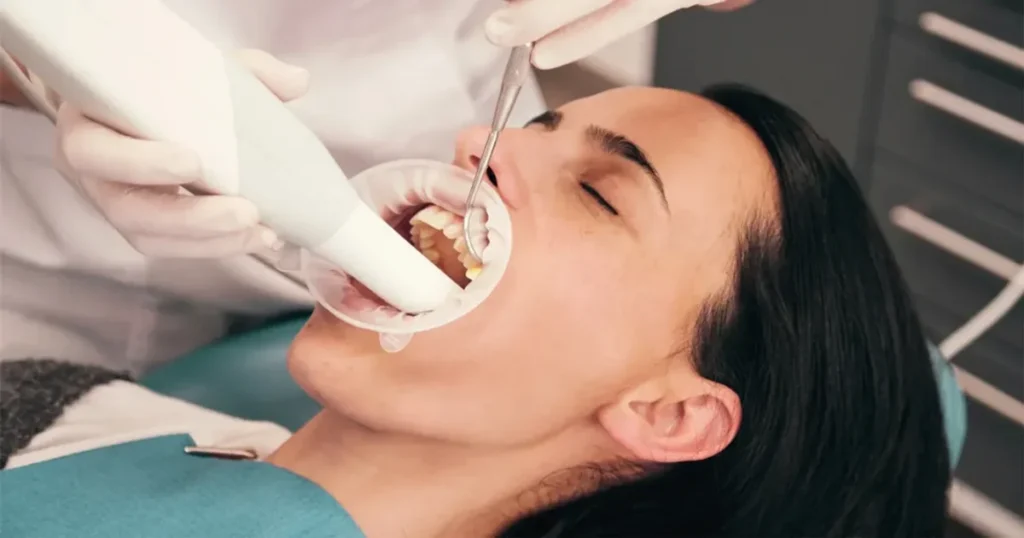
You may need a deep dental cleaning when gum disease has created periodontal pockets and plaque or tartar has accumulated below the gumline. Heavy tartar on the visible parts of the teeth does not by itself mean scaling and root planing is necessary. The decision should be based on periodontal findings such as pocket measurements, bleeding, attachment loss, and dental X-rays. Periodontal gum care can address these problems before further supporting tissue is lost.
A regular teeth cleaning mainly removes deposits around the visible tooth surfaces and gumline. Scaling and root planing reaches deeper along the root surfaces. Understanding this difference is important if your dentist has recommended treatment even though your gums or teeth are not painful.
When Do You Need a Deep Dental Cleaning?
Scaling and root planing is generally recommended for periodontitis rather than routine plaque buildup. Periodontitis affects the tissues that support the teeth and can cause attachment and bone loss. The American Dental Association identifies scaling and root planing as the initial nonsurgical treatment of choice for patients with periodontitis.
Several findings are usually considered together before treatment is recommended.
Deep Periodontal Pockets
A periodontal probe measures the space between the tooth and gum. According to the National Institute of Dental and Craniofacial Research, healthy periodontal pockets are generally 1 to 3 mm deep. Deeper measurements can indicate periodontal disease.
A deeper pocket does not automatically mean you need scaling and root planing. Inflamed gums can sometimes create a deeper measurement without true attachment or bone loss. Dentists refer to this as a pseudo-pocket.
The diagnosis becomes more concerning when deeper pockets occur with bleeding, attachment loss, subgingival calculus, or bone changes on X-rays.
Bleeding Gums and Tartar Below the Gumline
Bleeding during periodontal probing is a sign of inflammation. If the dentist also finds hardened tartar below the gums inside periodontal pockets, a routine cleaning may not reach the affected root surfaces adequately.
Scaling removes plaque and tartar from above and below the gumline. Root planing then cleans the root surface inside the periodontal pocket.
Bleeding alone does not confirm periodontitis. Gingivitis can cause significant bleeding without attachment or bone loss.
Bone Loss or Loss of Gum Attachment
Periodontitis differs from gingivitis because the supporting tissues around the teeth have been damaged.
Clinical attachment loss means the gum attachment around a tooth has moved away from its normal position. Dental X-rays can also show loss of the bone supporting the teeth.
These findings provide stronger clinical reasons for scaling and root planing than surface tartar alone.
Deep Cleaning vs Regular Dental Cleaning
The terms can sound similar, but the treatments have different purposes.
| Regular Dental Cleaning | Deep Dental Cleaning |
|---|---|
| Primarily preventive | Treatment for periodontal disease |
| Commonly used when the supporting tissues are healthy | Used when periodontitis affects areas below the gumline |
| Removes plaque and tartar around accessible tooth surfaces | Removes plaque and tartar from periodontal pockets and root surfaces |
| Does not involve root planing | Includes scaling and root planing |
| Often completed in one routine visit | May be divided into sections of the mouth across more than one visit |
| Local anesthesia is usually unnecessary | Local anesthesia may be used |
| Follow-up follows the patient’s preventive schedule | Periodontal reassessment is commonly required |
The ADA specifically distinguishes patients with healthy periodontal tissues from those with attachment and bone loss requiring periodontal treatment. It also recognizes an intermediate situation: generalized gingival inflammation without attachment or bone loss. Such cases are not automatically treated as periodontitis.
This distinction matters because a patient can have substantial visible tartar and inflamed gums without needing root planing.
Signs You May Need a Deep Cleaning
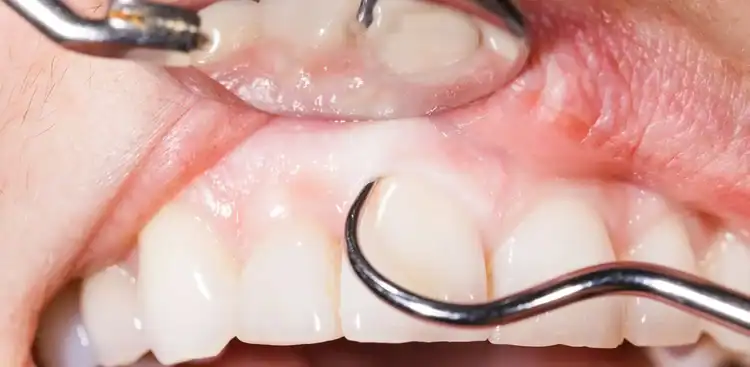
Periodontitis can progress without significant pain. Possible signs include:
- Gums that bleed during brushing or flossing
- Persistent gum inflammation
- Gum recession
- Bad breath that persists despite regular cleaning
- Teeth appearing longer because the gums have receded
- Spaces developing between teeth
- Changes in the way teeth fit together
- Loose teeth
- Tartar extending below the gumline
- Deep periodontal pocket measurements
Some patients have few noticeable symptoms. This is why periodontal probing and dental X-rays can be important even when the teeth feel normal.
The NIDCR lists bleeding gums, recession, loose teeth, sensitivity, and pain during chewing among possible signs of periodontal disease.
Another advantage of having deep dental cleaning is that you won’t need teeth whitening and other cosmetic dentistry procedures mainly because deep dental cleaning will take care of the natural teeth color too.
Read more: Teeth Whitening Insurance Coverage
How Dentists Determine If You Need Scaling and Root Planing
A recommendation for deep cleaning should come from a periodontal evaluation rather than the appearance of the teeth alone.
The assessment typically includes:
- Periodontal probing
A small periodontal probe measures the pocket around each tooth. Measurements are recorded at several points to identify areas where the gum has separated from the tooth. - Bleeding assessment
The dentist or hygienist records areas that bleed during probing because bleeding can indicate active inflammation. - Clinical attachment assessment
Pocket depth is interpreted together with the position of the gum margin. This helps distinguish a true periodontal pocket from swelling-related pseudo-pocketing. - Checking for tartar below the gumline
Subgingival calculus can maintain inflammation and may require instrumentation below the gum margin. - Dental X-rays
X-rays can show the height of the bone around the teeth and reveal periodontal bone loss that is not visible during a routine examination.
A single pocket measurement should not usually be interpreted on its own. For example, a 4 mm pocket with no bleeding or attachment loss is different from a 4 or 5 mm pocket accompanied by bleeding and measurable loss of supporting tissue.
What Happens During a Deep Dental Cleaning?
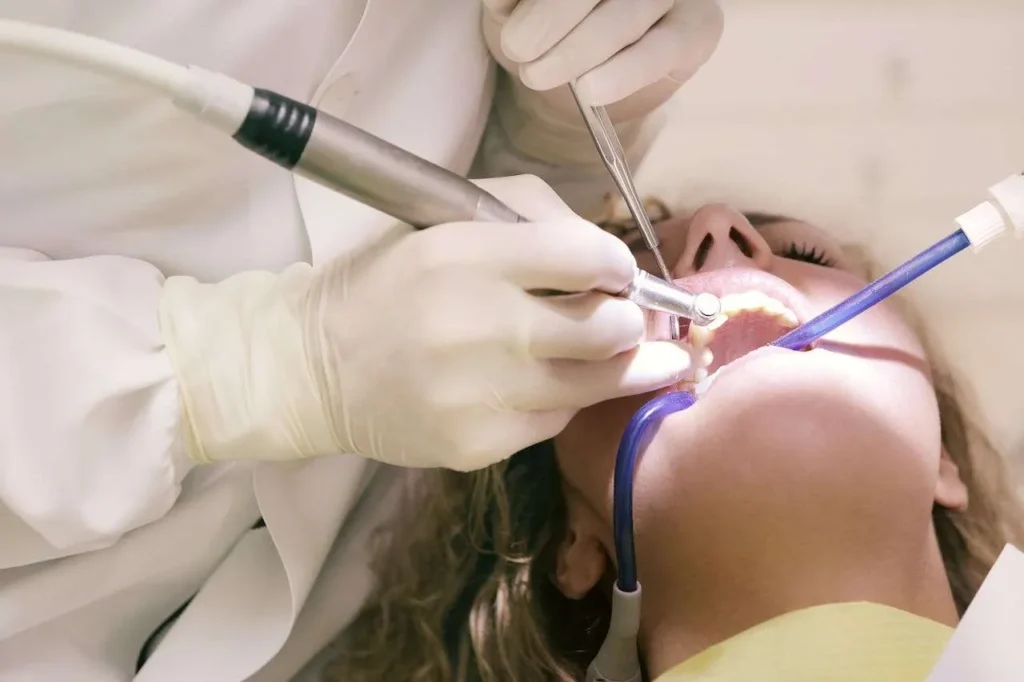
Scaling and root planing reaches below the gumline into areas that are difficult to clean with a toothbrush or standard preventive cleaning.
During treatment:
- The area may be numbed.
Local anesthesia can be used if deeper instrumentation would otherwise be uncomfortable. - Plaque and tartar are removed below the gums.
Hand instruments and ultrasonic scalers can be used to clean around the teeth and inside periodontal pockets. - The root surfaces are thoroughly debrided.
Root planing removes deposits and contaminated material from the root surface. - The mouth may be treated in sections.
More extensive periodontal disease may require more than one appointment.
After treatment, the gums are given time to respond before the periodontal measurements are checked again.
Have You Been Told You Need a Deep Dental Cleaning?
Tsawwassen Family Dental can assess your periodontal pocket measurements, gum health, and dental X-rays to determine the appropriate level of periodontal treatment. Contact the clinic to book a gum health assessment or discuss a recommendation for scaling and root planing.
Does Deep Cleaning Hurt?
Local anesthesia is often used during scaling and root planing, particularly when deeper pockets need treatment. This reduces discomfort while the root surfaces are being cleaned.
After the anesthetic wears off, some patients experience temporary tenderness or sensitivity. The ADA notes that discomfort may last for a day or two, while tooth sensitivity can persist for up to about a week. The gums may also feel tender or bleed temporarily.
Discomfort varies with the depth of the pockets and extent of inflammation. Contact your dentist if pain becomes severe, swelling increases, or symptoms do not improve as expected.
What to Expect After a Deep Cleaning
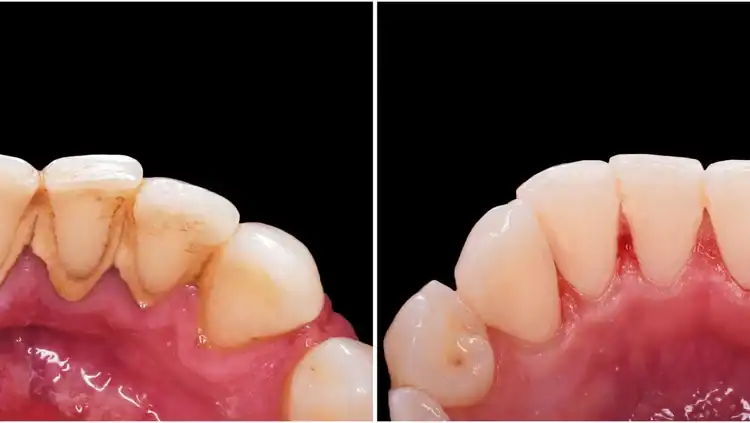
The gums may feel tender immediately after scaling and root planing. Cold sensitivity can also occur because inflamed tissue has been reduced around previously covered root surfaces.
As healing occurs, you may notice that:
- Bleeding decreases
- Gum swelling reduces
- The gums fit more closely around some teeth
- Teeth appear slightly longer as swollen tissue shrinks
- Root sensitivity becomes more noticeable temporarily
A periodontal reassessment is usually important. The dentist or hygienist measures the pockets again and checks how the tissues have responded.
The ADA notes that periodontal tissues may require about four weeks to show the optimal response to nonsurgical periodontal therapy.
Some deeper pockets improve enough to be maintained without additional active treatment. Persistent deep pockets may require further periodontal therapy or assessment by a periodontist.
What Happens If You Delay Treatment?
Periodontitis can continue to damage the attachment and bone supporting the teeth even when there is little pain.
Without appropriate treatment, possible consequences include:
- Increased periodontal pocket depth
- Additional gum recession
- Further bone loss
- Increased tooth mobility
- Changes in tooth position
- Tooth loss in advanced disease
The NIDCR explains that advanced periodontal disease can destroy the bone supporting the teeth, eventually causing looseness or shifting.
The rate of progression is not identical in all areas of the mouth. This is another reason treatment recommendations should be based on the individual periodontal examination.
Will You Need Deep Cleanings Again?
Scaling and root planing is usually an active treatment for periodontitis, not something that automatically replaces routine cleaning at every future appointment.
After treatment, many patients move into periodontal maintenance. These appointments focus on controlling plaque and tartar above and below the gumline while monitoring periodontal pockets and attachment levels.
The frequency depends on the stability of the gum disease and the patient’s risk factors. Periodontal maintenance appointments are often more frequent than routine preventive cleanings because previously affected areas need closer monitoring.
If the disease remains stable, repeat full scaling and root planing may not be necessary. If particular areas show recurrent deep pockets, bleeding, or new attachment loss, additional treatment may be recommended.
Daily plaque control remains important between visits. Brushing twice daily and cleaning between the teeth help reduce the bacterial buildup that contributes to periodontal inflammation.
Conclusion
A deep dental cleaning is appropriate when the examination shows periodontal disease below the gumline, especially deeper true periodontal pockets, bleeding, attachment loss, subgingival tartar, or bone loss. Heavy visible buildup alone does not automatically mean root planing is required, and gingivitis without attachment loss may be managed differently.
Tsawwassen Family Dental can evaluate gum health through periodontal measurements and appropriate dental imaging. If periodontitis is present, periodontal gum care can address the affected areas and establish the appropriate follow-up schedule.
FAQ
These answers address common questions patients have after being told they may need scaling and root planing.
-
How Do I Know If I Really Need a Deep Dental Cleaning?
Ask about your periodontal pocket measurements, bleeding on probing, attachment levels, tartar below the gumline, and any bone loss visible on X-rays. Scaling and root planing is generally recommended when these findings support a diagnosis of periodontitis rather than surface buildup alone.
-
What Pocket Depth Usually Requires a Deep Cleaning?
There is no single pocket depth that automatically means you need scaling and root planing. Healthy pockets are commonly 1 to 3 mm. Measurements of 4 mm or more deserve closer assessment, but the dentist also considers bleeding, clinical attachment loss, subgingival tartar, and bone loss.
-
Can Gingivitis Be Treated Without a Deep Cleaning?
Yes. Gingivitis affects the gums without the attachment and bone loss seen in periodontitis. Professional plaque and tartar removal plus improved daily oral hygiene may be sufficient.
-
How Long Does a Deep Dental Cleaning Take?
The time depends on how many teeth require treatment and the severity of the periodontal disease. Some patients can be treated in one visit, while others need appointments for separate areas of the mouth.
-
Can Gums Heal After Scaling and Root Planing?
Inflammation and bleeding can improve after treatment, and some periodontal pockets may become shallower. Lost bone and attachment do not simply return to their original condition after routine scaling and root planing. More advanced periodontal defects may require additional periodontal procedures.