


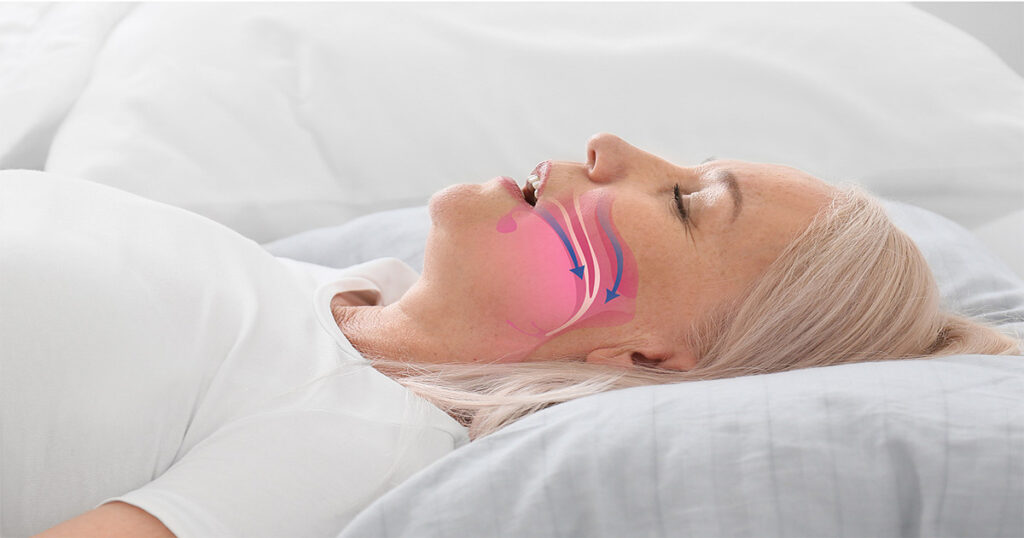
Airway-focused dentistry examines how the structure and function of your mouth, jaw, tongue, and airway influence breathing during sleep. For many people with snoring, disrupted sleep, or even sleep apnea, the problem isn’t just in the nose or throat; it’s how the jaw and tongue position affect airflow at night.
In this article, you’ll learn what airway-focused dentistry is, why oral structures play such a critical role in sleep quality, common signs your airway may be compromised, and which dental treatments can help both children and adults breathe and sleep better.

What Is Airway-Focused Dentistry?
Airway-focused dentistry is an approach that prioritizes airway health alongside traditional dental care. Instead of focusing only on teeth alignment or gum health, it evaluates how jaw position, tongue posture, and oral muscle function affect breathing, especially during sleep.
Dentists trained in this approach look for signs of sleep-disordered breathing, mouth breathing, and airway restriction. The goal is not just symptom relief, but long-term improvement in breathing patterns that support deeper, more restorative sleep.
Why Your Mouth Could Save Your Sleep
Many people underestimate mouth and dental issues, but the truth is that your mouth can save your sleep:
Jaw Position and Airway Space
The lower jaw plays a major role in keeping the airway open during sleep. If the jaw sits too far back, it can narrow the airway and increase the risk of snoring or obstruction, an issue often connected to TMJ & jaw problems.
Tongue Posture and Airway Collapse
When the tongue rests low or falls backward during sleep, it can partially block the airway. Poor tongue posture is a common contributor to snoring and mild obstructive sleep apnea, and it’s a key focus in myofunctional therapy, which addresses oral muscle function.
Mouth Breathing vs Nasal Breathing
Chronic mouth breathing bypasses the nose’s natural ability to filter, humidify, and regulate airflow. This can worsen sleep quality and contribute to dry mouth, snoring, and fatigue. Encouraging nasal breathing is a core principle of airway-focused dental care.
Orthodontics and Airway Development
In some cases, narrow arches or improper jaw development reduce airway volume. This connection between orthodontics and airway health explains why some patients experience breathing improvements after airway-conscious orthodontic treatment.
Read more: Free dental care for low-income adults
Signs Your Airway May Be Affecting Your Sleep
You may benefit from an airway-focused dental evaluation if you experience:
- Loud or chronic snoring
- Daytime fatigue despite adequate sleep hours
- Waking up with a dry mouth or sore jaw
- Teeth grinding or clenching during sleep (see signs of teeth grinding in your sleep)
- Morning headaches or brain fog
- Difficulty breathing through your nose at night
These symptoms often overlap and are frequently overlooked during routine dental checkups or medical visits.

Common Airway-Focused Dental Treatments
Airway-focused dentistry uses targeted treatments that support better breathing by improving jaw position, tongue function, and airway stability. The approach is personalized, depending on whether airway restriction is functional, structural, or both.
- Oral appliance therapy
Custom dental appliances are worn during sleep to reposition the lower jaw and tongue forward. This helps keep the airway open, reducing snoring and supporting breathing in patients with sleep-disordered breathing or obstructive sleep apnea. - Myofunctional therapy
This therapy focuses on retraining the muscles of the tongue, lips, and face. By improving tongue posture and swallowing patterns, myofunctional therapy supports long-term airway stability and reduces airway collapse during sleep. - Airway-conscious orthodontics
In cases where narrow arches or improper jaw development restrict airflow, orthodontic treatment may be used to expand the dental arches or improve jaw alignment. This can increase airway volume and improve breathing, especially when addressed early. - Jaw stabilization and TMJ management
Addressing jaw tension, clenching, or misalignment can improve airway function. Stabilizing the jaw may reduce airway obstruction caused by poor mandibular positioning during sleep.
These treatments are often combined rather than used alone. An airway-focused plan looks at the whole system, jaw position, muscle function, and breathing habits to achieve meaningful, long-term improvements in sleep and airway health.
Airway-Focused Dentistry for Children vs Adults
Children benefit from early airway evaluation just like pediatric dentistry because breathing habits influence facial growth, jaw development, and long-term sleep quality. Addressing mouth breathing, tongue posture, or habits early can reduce the risk of orthodontic relapse and sleep issues later in life.
Adults often seek airway-focused dentistry due to snoring, poor sleep quality, jaw discomfort, or diagnosed sleep apnea. While growth is complete, adult treatment focuses on improving function, reducing obstruction, and supporting better sleep through appliances and muscle retraining.
The Vogue magazine says:
“In adults, airway dentists recommend therapies that can expand, support, and stabilize the airway using different approaches that help maintain an open and healthy passage for breathing.”
Is Poor Sleep Affecting Your Daily Life?
If poor sleep, snoring, or jaw tension is affecting your daily life, an airway-focused approach may offer answers. At Tsawwassen Family Dental, we evaluate oral structures, jaw function, and breathing patterns as part of comprehensive care.
Feel Reassured Choosing Airway-Focused Dentistry
Airway-focused dentistry recognizes that healthy sleep starts with healthy breathing, and breathing starts in the mouth. Jaw position, tongue posture, and oral muscle function all play a critical role in keeping the airway open during sleep. When these factors are overlooked, sleep quality and overall health can suffer.
If snoring, fatigue, or jaw discomfort are affecting your sleep, Tsawwassen Family Dental can assess whether airway-focused dental care may help improve your breathing and long-term sleep health.
FAQ
Below are answers to common questions about airway-focused dentistry and its role in improving sleep quality.
-
How does airway-focused dentistry differ from traditional dentistry?
Traditional dentistry focuses mainly on teeth and gums, while airway-focused dentistry evaluates how oral structures affect breathing, sleep, and overall health.
-
Can dental issues really cause sleep apnea or snoring?
Yes. Jaw position, tongue posture, and airway size can contribute to airway obstruction during sleep, leading to snoring or obstructive sleep apnea.
-
Is airway-focused dentistry only for people with diagnosed sleep apnea?
No. It can help people with snoring, mouth breathing, jaw tension, or poor sleep quality—even without a formal sleep apnea diagnosis.
-
What dental treatments help improve airway function?
Treatments may include oral appliance therapy, myofunctional therapy, orthodontic expansion, and jaw stabilization approaches depending on the individual’s needs.
Have you noticed snoring, mouth breathing, or poor sleep quality?
Share your experience or questions below
Your insight may help others recognize the signs earlier.