

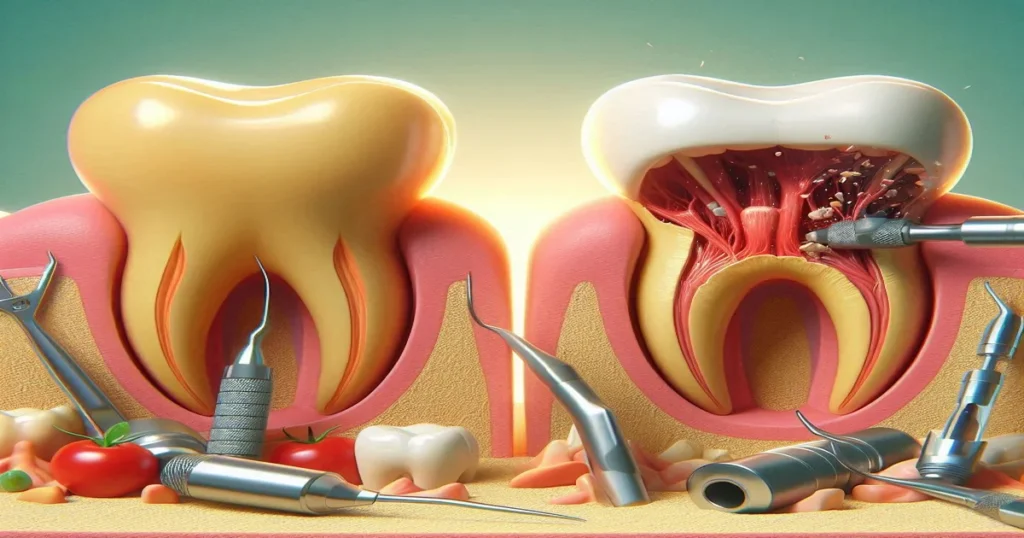
If you’re facing a severely damaged or infected tooth, you’re likely deciding between two proven treatment options: saving the tooth with a root canal or removing it through extraction. Both procedures are commonly used to treat pain, infection, and structural damage, but they serve very different purposes. When comparing root canal vs extraction, the most important factor is whether your natural tooth can be predictably restored.
In this article, we will provide an evidence-based comparison of root canal vs tooth extraction, explain when each treatment is recommended, and help you understand which option may be best for your situation.
What’s the Difference Between a Root Canal and an Extraction?
A root canal is a restorative procedure that treats infection or inflammation inside the tooth. During treatment, the infected pulp is removed, the root canals are disinfected, and the tooth is sealed and usually protected with a dental crown. The goal is to eliminate pain and infection while keeping your natural tooth in place.
An extraction, on the other hand, involves removing the entire tooth from the mouth. This option is typically recommended when the tooth is too damaged to be restored, such as in cases of severe decay, advanced gum disease, or a fracture that extends below the gum line.
In simple terms, a root canal and a tooth extraction address the same underlying problem in two very different ways: one saves the tooth, while the other removes it completely. In many situations, preserving the natural tooth is preferred, but it’s not always the most appropriate solution.
In the following sections, we will examine each treatment separately and in greater detail to help you understand when and why each option is recommended.
Understanding Root Canal Therapy: Saving Your Tooth
Root canal therapy, also known as endodontic treatment, is recommended when the pulp tissue inside a tooth becomes inflamed or infected. The dentist carefully removes the infected pulp, disinfects the canals, and fills the space with a biocompatible material. A crown is typically placed afterward to reinforce the tooth.
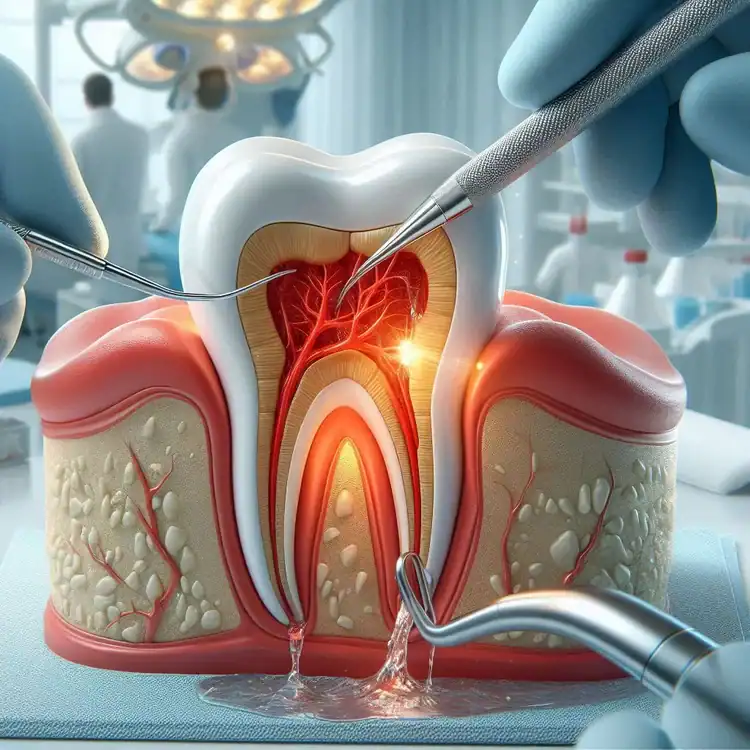
This procedure allows the tooth to remain functional in the arch. It helps maintain your bite alignment and prevents complications like bone loss.
From an evidence-based perspective, saving a natural tooth is generally considered the gold standard whenever the tooth is structurally restorable and has a favorable long-term prognosis. Studies have shown that root canal-treated teeth restored with appropriate crowns can function successfully for many years, often decades, with proper oral hygiene and regular dental care.
Pain during modern root canal treatment is typically well controlled with local anesthesia, and most patients describe the experience as similar to receiving a filling. Mild soreness may occur for a few days, but normal activities can usually be resumed quickly.
Understanding Tooth Extraction: Removing the Problem
When a tooth is too compromised for restoration due to deep decay, fracture, or failed prior treatment, tooth extraction becomes necessary. This involves removing the entire tooth from its socket, either through a surgical or straightforward approach.
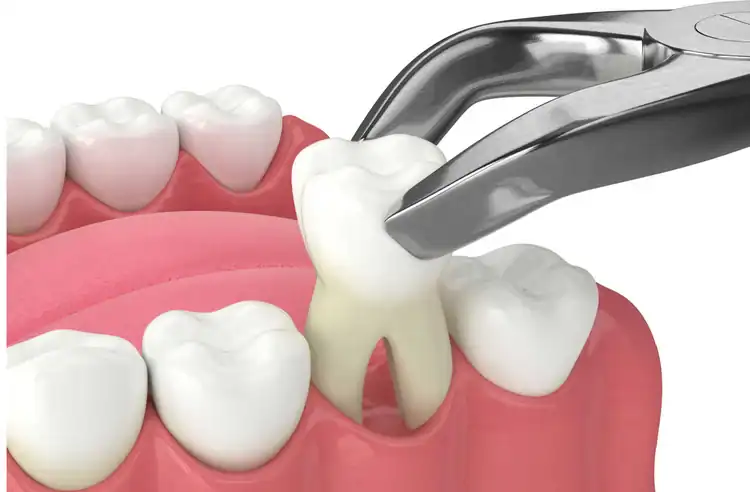
Tooth extraction is recommended when a tooth is no longer restorable because of extensive decay, severe periodontal disease, advanced infection, or a fracture that extends below the gum line or into the root.
Extraction effectively removes the source of pain and infection. However, it also leaves a gap that can affect both function and appearance. When a missing tooth is not replaced, neighboring teeth may drift into the space, the opposing tooth may over-erupt, and the underlying jawbone can gradually shrink. Over time, this can alter your bite, reduce chewing efficiency, and affect facial support.
If you’re considering extraction, our dental implants service offers a lasting solution to restore function and aesthetics.
Root Canal vs. Extraction: A Detailed Comparison
When evaluating root canal vs extraction, it is helpful to understand that these treatments address the same problem in fundamentally different ways. A root canal treats the problem inside the tooth, saving its structure and function. Extraction removes the problem entirely, but introduces a need for tooth replacement.
According to the University of Pennsylvania:
“Root canal therapy is recommended when teeth can be saved with treatment, while an extraction is performed when the tooth’s structure is too damaged, or a crack goes beneath the gum’s surface, not leaving enough structure for stability or use after the repair. However, some patients opt for extraction because they think it’s less painful and more affordable than a root canal. However, that’s not necessarily true.”
Here’s a complete comparison:
| Aspect | Root Canal Therapy | Tooth Extraction |
| Purpose | Preserves and restores a natural tooth | Removes a non-restorable or problematic tooth |
| Procedure Type | Endodontic (internal disinfection and filling) | Surgical or non-surgical removal of the entire tooth |
| Recovery Time | Typically, 2–3 days of mild discomfort | May require 7–14 days for tissue healing |
| Esthetic Outcome | Maintains natural tooth structure and appearance | May lead to visible gaps unless replaced |
| Impact on Bite & Alignment | Preserves natural function and bite stability | Risk of shifting teeth and bite issues if not restored |
| Follow-Up Treatment | Usually requires a crown | May require an implant, bridge, or denture for complete restoration |
| Long-Term Cost | Higher up front, lower over time without the need for prosthetics | Lower up front, higher later if replacement is needed |
| Jawbone Preservation | Maintains natural stimulation through the tooth root | Bone loss may occur if the tooth is not replaced |
Root canals generally involve higher initial costs due to the need for follow-up restoration, but they often reduce the likelihood of future interventions. Extractions may seem less costly upfront, but they carry long-term risks and replacement costs if not properly rehabilitated.
In terms of recovery, root canals usually allow a quicker return to normal function. Extractions (particularly the surgical ones) may require more extended healing periods and dietary modifications.
Clinical Success Rates and Long-Term Prognosis
When deciding between root canal or tooth extraction, long-term success rates are an important part of the discussion. Root canal-treated teeth that are properly restored and maintained can remain healthy and functional for many years. Dental implants placed after extraction also have high success rates, but they involve additional surgery, healing time, and financial investment.
Whenever a natural tooth can be predictably saved, many dentists prefer this option because no artificial replacement fully replicates the biological advantages of your own tooth.
Contact Us for Help!
Still deciding between a root canal and an extraction? At Tsawwassen Family Dental, we combine clinical experience with patient-focused care to help you choose the most effective and lasting solution.
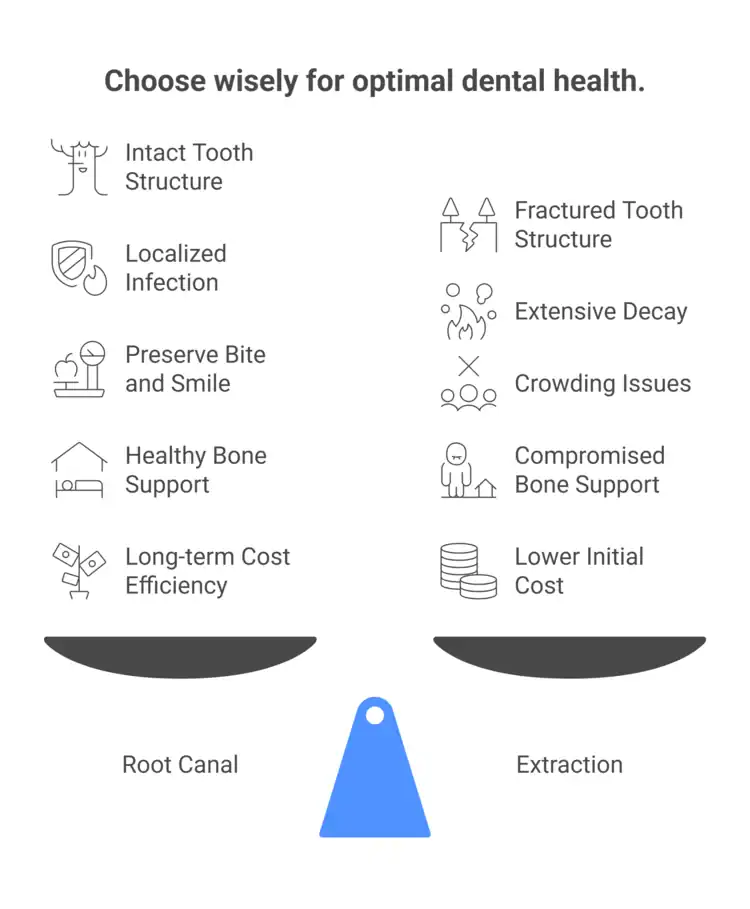
Root Canal or Extraction: When to Choose Each Option
A root canal is generally recommended when:
- The tooth has sufficient healthy structure remaining
- The root is intact and free of vertical fractures
- Periodontal support is adequate
- The tooth can be restored with a crown or other restoration
- Preserving the natural tooth aligns with your long-term goals
A tooth extraction is usually recommended when:
- The tooth has a vertical root fracture
- Decay extends too far below the gum line
- Bone support is severely compromised
- Previous treatments have failed, and the prognosis is poor
- Restoration is not predictable or cost-effective
If you’re facing sudden pain or swelling, our Dental Emergencies service can provide immediate assessment and relief.
Good to read: What to Do if You Have a Toothache?
Clinical imaging, periodontal evaluation, and your overall treatment plan will guide the final decision. Your dentist’s role is to ensure the selected treatment supports your long-term health and function.
If you enjoy blogs that compare two different dental procedures for a specific issue, we recommend reading our dental implants vs dentures blog.
Feel Confident Deciding on Root Canal vs Extraction
Choosing between pulling a tooth vs root canal isn’t always straightforward, but with proper diagnosis, the decision becomes clear. Each option serves a unique purpose. Root canals preserve your natural tooth and prevent shifting, while extractions are best for teeth that are beyond saving.
Please note that Tsawwassen Family Dental will assess all clinical factors and collaborate with you to determine the option that best aligns with your oral health goals. In the case of oral health, you can learn and maintain a solid oral health routine by reading our oral health guide blog.
FAQ
-
Is it better to get a root canal or a tooth extraction?
That depends on the condition of your tooth. If it’s structurally stable and restorable, root canal therapy offers the benefit of keeping your natural tooth. But if the damage is extensive, extraction may be necessary. Not sure where your case falls? A professional assessment at our clinic can guide the next step.
-
Does a root canal hurt more than an extraction?
Both procedures are done under anesthesia, and most patients report manageable discomfort. Root canals tend to have a milder recovery compared to surgical extractions. If you’re anxious about pain, our team can discuss your options for comfort and sedation.
-
What happens if I extract a tooth and don’t replace it?
Gaps left by missing teeth can lead to shifting, bite issues, and bone loss. Over time, this could affect your chewing and even facial balance. If you’re considering extraction, ask us about tooth replacement solutions that restore both function and appearance.
-
Are root canals more expensive than extractions?
At first glance, yes. But keep in mind that replacing a lost tooth with an implant or bridge adds to the total cost. Sometimes, saving your tooth can be the more economical path. We’ll break down your options clearly during your visit.
-
Can every infected tooth be saved with a root canal?
Not in every case. Some teeth are too compromised due to fractures or advanced bone loss. The good news? If you’re unsure whether your tooth can be saved, we’re equipped to assess it and walk you through all available treatment routes.
Have you ever been stuck in the process of choosing one of these treatments?
Share your experience or questions with us in the comments