


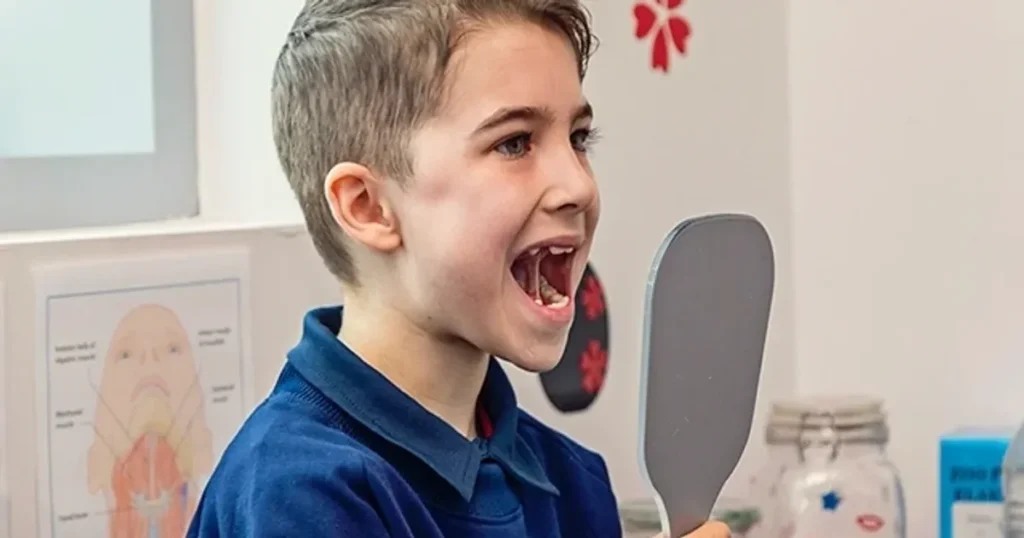
Myofunctional therapy is a treatment approach designed to correct improper tongue posture and oral muscle function that can interfere with breathing, speech, jaw stability, and long-term dental health, particularly TMJ & jaw problems. Many people experience symptoms such as mouth breathing, snoring, jaw tension, or orthodontic relapse without realizing these issues may stem from dysfunctional oral muscle patterns rather than teeth alone.
In this article, you’ll learn how myofunctional therapy works, how tongue ties affect breathing and development, the connection between oral muscle function and airway health, and how therapy compares to procedures like frenectomy.
What Is Myofunctional Therapy and How Does It Work?
Myofunctional therapy is a structured program of exercises that retrains the muscles of the tongue, lips, cheeks, and face to function correctly at rest and during activities such as swallowing and speaking. The primary goal is to establish correct tongue posture against the roof of the mouth, maintain a closed-lip resting position, and encourage nasal breathing.
Rather than focusing only on tooth alignment, myofunctional therapy addresses orofacial myology, the relationship between muscle function and oral development. When oral muscles are properly coordinated, they help support jaw alignment, stable orthodontic results, and healthy breathing patterns.
The Role of Tongue Posture, Lips, and Facial Muscles
The tongue plays a critical role in shaping the jaws and maintaining airway space. When the tongue rests low or presses forward, it can contribute to crowding and bite issues over time. Weak lip seal or overactive facial muscles can further disrupt balance, leading to mouth breathing and altered facial growth.
Read more: Crooked teeth causes
How Improper Oral Function Affects Breathing
Improper oral muscle function often leads to chronic mouth breathing, bypassing the nose’s natural filtration and humidification systems. This pattern can narrow the airway, affect facial development in children, and contribute to orthodontic relapse after treatment, a concern often connected to long-term outcomes.

Tongue Ties: How They Affect Breathing, Speech, and Oral Health
A tongue tie occurs when the tissue connecting the tongue to the floor of the mouth restricts movement. Limited tongue mobility can interfere with speech articulation, swallowing, and proper tongue posture. In children, tongue ties are often identified during pediatric dentistry visits, especially when feeding or speech delays are present.
Restricted tongue movement can also affect oral hygiene by limiting the tongue’s ability to clean the mouth naturally. Over time, this may contribute to gum inflammation and increase the need for focused periodontal gum care, particularly if plaque control is compromised.
Read more: How to Take Care of Your Tongue
The Connection Between Myofunctional Therapy and Breathing Issues
Myofunctional therapy supports healthier breathing by training the tongue and facial muscles to maintain an open, stable airway. Encouraging nasal breathing reduces dependence on mouth breathing, which is commonly associated with dryness and irritation.
While myofunctional therapy is not a standalone treatment for sleep apnea, it can complement airway-focused dental care and support long-term outcomes as part of preventive dental care, especially for patients with sleep-disordered breathing or chronic mouth-breathing habits.
Here’s also what the Cleveland Clinic says about how long you may need myofunctional therapy:
“According to the Academy of Orofacial Myofunctional Therapy, treatment typically lasts six to 12 months. You may need more or less time depending on your situation. Your provider will tell you how many days per week you should do therapy and how long each session will last.”

Who Can Benefit From Myofunctional Therapy (Children vs Adults)
Myofunctional therapy can benefit people at different stages of life, but the goals and outcomes vary between children and adults. Understanding these differences helps determine when therapy may be most effective.
Children May Benefit If They:
- Breathe primarily through the mouth instead of the nose
- Have a tongue tie affecting speech, feeding, or swallowing
- Show delayed speech development or unclear articulation
- Experience orthodontic issues such as crowding or relapse after braces
- Have habits like thumb sucking that affect oral muscle development
- Exhibit signs of disrupted sleep, such as snoring or restless breathing
Early therapy helps guide proper facial growth, airway development, and stable tooth alignment before problems become more complex.
Adults May Benefit If They:
- Experience chronic jaw tension or discomfort related to muscle imbalance
- Clench or grind their teeth, especially during sleep
- Struggle with persistent mouth breathing or dry mouth
- Notice relapse after orthodontic treatment
- Have speech fatigue or difficulty maintaining proper tongue posture
- Are managing mild sleep-disordered breathing or snoring
Although adult habits are more established, consistent therapy can still retrain muscle function and improve comfort, breathing patterns, and oral stability, especially for those with sleep apnea.
Here’s a video from Dr Audrey Yoon’s office that teaches basic myofunctional therapy exercises that can be helpful for everyone:
Myofunctional Therapy vs Frenectomy: When Each Is Needed
Both myofunctional therapy and frenectomy address tongue-related issues, but they serve different purposes. Understanding how they differ helps determine which approach, or combination, is appropriate.
| Aspect | Myofunctional Therapy | Frenectomy |
|---|---|---|
| What it is | A therapy-based approach using exercises to retrain tongue and oral muscle function | A minor surgical procedure that releases a restricted tongue tie |
| Primary goal | Improve tongue posture, swallowing, breathing, and muscle coordination | Increase tongue mobility by removing restrictive tissue |
| Addresses muscle habits | Yes | No |
| Addresses structural restriction | No | Yes |
| Used for children | Yes, often for development and habit correction | Yes, when tongue mobility is physically limited |
| Used for adults | Yes, to retrain long-standing habits | Yes, when restriction affects function |
| Recovery time | Gradual improvement over weeks or months | Short surgical recovery |
| Best results | When used consistently and long-term | When combined with myofunctional therapy |
Myofunctional therapy and frenectomy are not competing treatments; they are often complementary. A frenectomy can improve tongue mobility, but therapy is usually needed to retrain function afterward. In some cases, therapy alone is sufficient; in others, combining both leads to the best long-term outcomes.
Need Professional Help?
If oral muscle function, breathing issues, or jaw discomfort are affecting your quality of life, a functional approach may help. At Tsawwassen Family Dental, we assess oral habits as part of comprehensive dental care and guide patients toward appropriate solutions.
Your Next Step With Myofunctional Therapy
Myofunctional therapy addresses the underlying oral muscle dysfunction that contributes to mouth breathing, tongue ties, orthodontic relapse, and airway-related concerns. By focusing on proper tongue posture and muscle coordination, it offers a functional approach to improving breathing, speech, and long-term dental stability.
If you’re experiencing chronic mouth breathing, jaw discomfort, or concerns related to oral function, Tsawwassen Family Dental can help evaluate whether myofunctional therapy or related treatments may be appropriate as part of a comprehensive care plan.
FAQ
Below are answers to common questions about myofunctional therapy and its role in oral and airway health.
-
What conditions does myofunctional therapy help with?
It may help with mouth breathing, tongue thrust, speech issues, orthodontic relapse, jaw discomfort, and breathing-related sleep problems when muscle dysfunction is involved.
-
Is myofunctional therapy effective for adults, or is it only for children?
It can be effective for both. While early intervention benefits children’s development, adults can still see improvements by retraining long-standing oral muscle habits.
-
Can myofunctional therapy help with snoring or sleep apnea?
It may reduce symptoms related to snoring or mild sleep-disordered breathing, especially when used alongside other medical or dental treatments. Still, it is not a standalone cure for sleep apnea.
Have you noticed mouth breathing, jaw tension, or speech issues in yourself or your child?
Share your questions or experiences below
Your insight may help others recognize the signs earlier.