

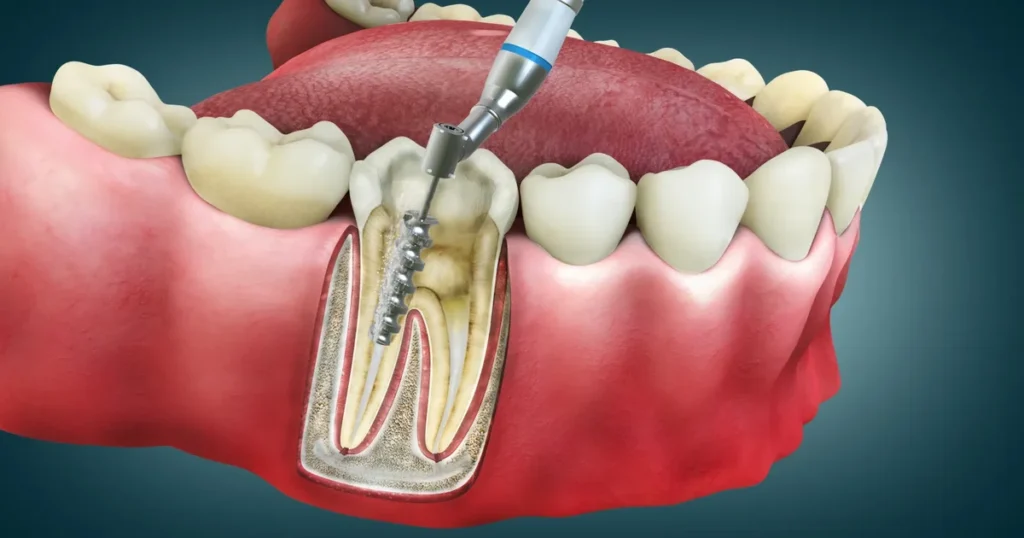
Regenerative root canals are a modern endodontic technique designed to save teeth that were once considered untreatable, especially severely damaged or immature teeth with dead pulp. Instead of simply cleaning and sealing the root, this approach aims to stimulate natural tissue regeneration inside the tooth, allowing continued root development and improved long-term strength.
In this article, we will explain what regenerative root canals are, how they differ from traditional root canal treatment, which teeth may benefit most, and whether this advanced option could be suitable for you or your child.
What Are Regenerative Root Canals?
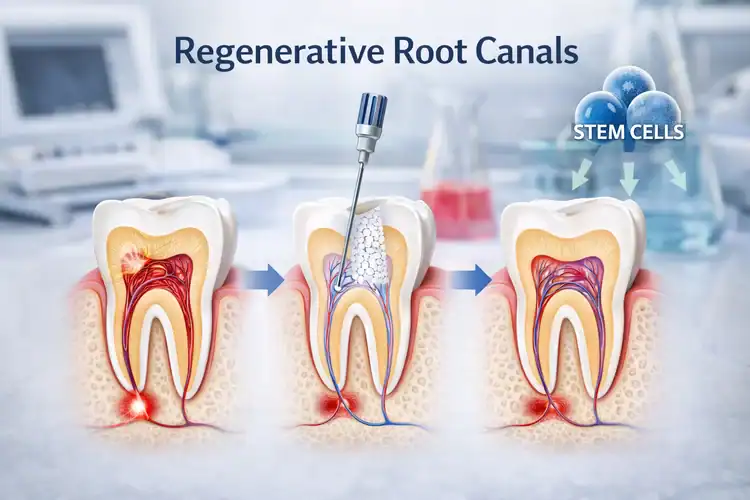
Regenerative root canal therapy, also known as regenerative endodontics, is a biologically based procedure that encourages the regrowth of living tissue inside the tooth. The goal is not just to remove infection, but to support continued development of the root structure.
How Regenerative Endodontics Works
After carefully disinfecting the root canal, the dentist creates conditions that allow the body’s own healing response to take over. This often involves stimulating bleeding within the canal to form a natural scaffold that carries stem cells and growth factors into the space. Over time, this process may allow new tissue to form and strengthen the tooth from within.
How it Differs From Traditional Root Canal
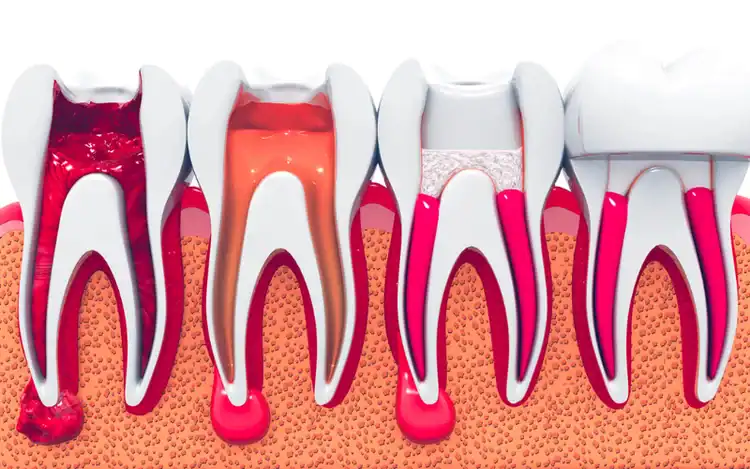
Traditional root canal treatment focuses on removing infected pulp and permanently sealing the canal. While effective, the tooth becomes non-vital and more brittle over time. Regenerative root canals, by contrast, aim to preserve or restore biological function, allowing the root to continue developing and reducing the risk of fracture, especially important in younger patients.
Read more: Root canal vs extraction
Teeth That Can Benefit From Regenerative Root Canal Therapy
Regenerative root canals are not suitable for every case, but they can be particularly beneficial in specific situations. Teeth with immature roots, open apices, or damage caused by trauma are often the best candidates. These cases are commonly seen in children and adolescents, which definitely require pediatric dentistry, but select adult cases may also qualify.
Teeth affected by dental trauma, severe decay, or pulp necrosis before root development is complete may benefit most from regenerative root canal therapy or dental emergency services, as traditional treatment options can leave the tooth structurally weak or require extraction.
The Science Behind Tooth Regeneration
The success of regenerative root canal therapy relies on the body’s natural healing mechanisms. Stem cells from the apical papilla, combined with growth factors released during the procedure, play a key role in tissue regeneration. The blood clot formed inside the canal acts as a scaffold, guiding new tissue growth and supporting continued root maturation.
While the regenerated tissue may not be identical to the original dental pulp, it can significantly improve tooth strength, sensitivity response, and long-term survival compared to traditional methods in suitable cases.
According to the American Association of Endodontists:
“Regenerative endodontics uses the concept of tissue engineering to restore the root canals to a healthy state, allowing for continued development of the root and surrounding tissue.”
Benefits and Limitations of Regenerative Root Canals
One of the main benefits of regenerative root canals is the potential to preserve natural tooth structure. Continued root development leads to thicker dentin walls, reducing the risk of fracture over time. This can be especially valuable for young patients whose teeth are still developing. However, regenerative endodontics is not always predictable. Not all teeth respond successfully, and the procedure requires careful case selection.
The benefits:
- Preserves the natural tooth structure instead of requiring extraction
- Supports continued root development in immature teeth
- May restore some level of tooth vitality rather than leaving the tooth non-vital
- Reduces long-term fracture risk compared to traditional root canal treatment in young teeth
- Uses the body’s natural healing response, making it a biologically conservative option
- Particularly beneficial for children and adolescents with dental trauma
Limitations
- Not suitable for all teeth or all patients
- Most effective in immature teeth with open root tips
- Outcomes can vary depending on the extent of infection or tissue damage
- Requires strict case selection and close follow-up
- May not fully restore normal pulp function in every case
- Availability may be limited to dentists with advanced endodontic training
Is Regenerative Root Canal Treatment Right for You or Your Child?
Whether regenerative root canal therapy is appropriate depends on factors such as age, root development stage, infection extent, and overall oral health. A thorough clinical and radiographic evaluation is essential to determine candidacy.
For children and teens, early diagnosis is especially important. Preserving and developing teeth whenever possible can prevent long-term complications and reduce the need for complex restorative treatments later in life.
Are Regenerative Root Canals Appropriate For You?
The dental team at Tsawwassen Family Dental can evaluate whether regenerative root canal therapy or other tooth-preserving options may be appropriate based on the condition of the tooth and overall oral health.
New Possibilities With Regenerative Root Canals
Regenerative root canals represent a major advancement in modern dentistry, offering hope for saving teeth that once would have been extracted. While not suitable for every situation, this treatment can provide meaningful long-term benefits when used appropriately. Consulting with a dentist experienced in advanced endodontic care is the first step in determining whether regeneration is a viable option.
At Tsawwassen Family Dental, advanced diagnostic tools and modern endodontic techniques enable our team to assess whether regenerative treatment is a viable option before pursuing more invasive solutions.
FAQ
-
How is a regenerative root canal different from a standard root canal?
A regenerative root canal aims to stimulate tissue regrowth and continued root development, while a standard root canal removes pulp and permanently seals the tooth.
-
Can regenerative root canals restore tooth vitality?
In some cases, partial vitality and improved biological function may return, though results vary by individual.
-
Are regenerative root canals only for children and teens?
They are most commonly used in younger patients with immature teeth, but select adult cases may also qualify.
-
Is regenerative endodontic treatment widely available?
This treatment requires specialized training and is not offered by all dental clinics, so availability may vary.
Have you experienced dental trauma?
Share your situation or questions below